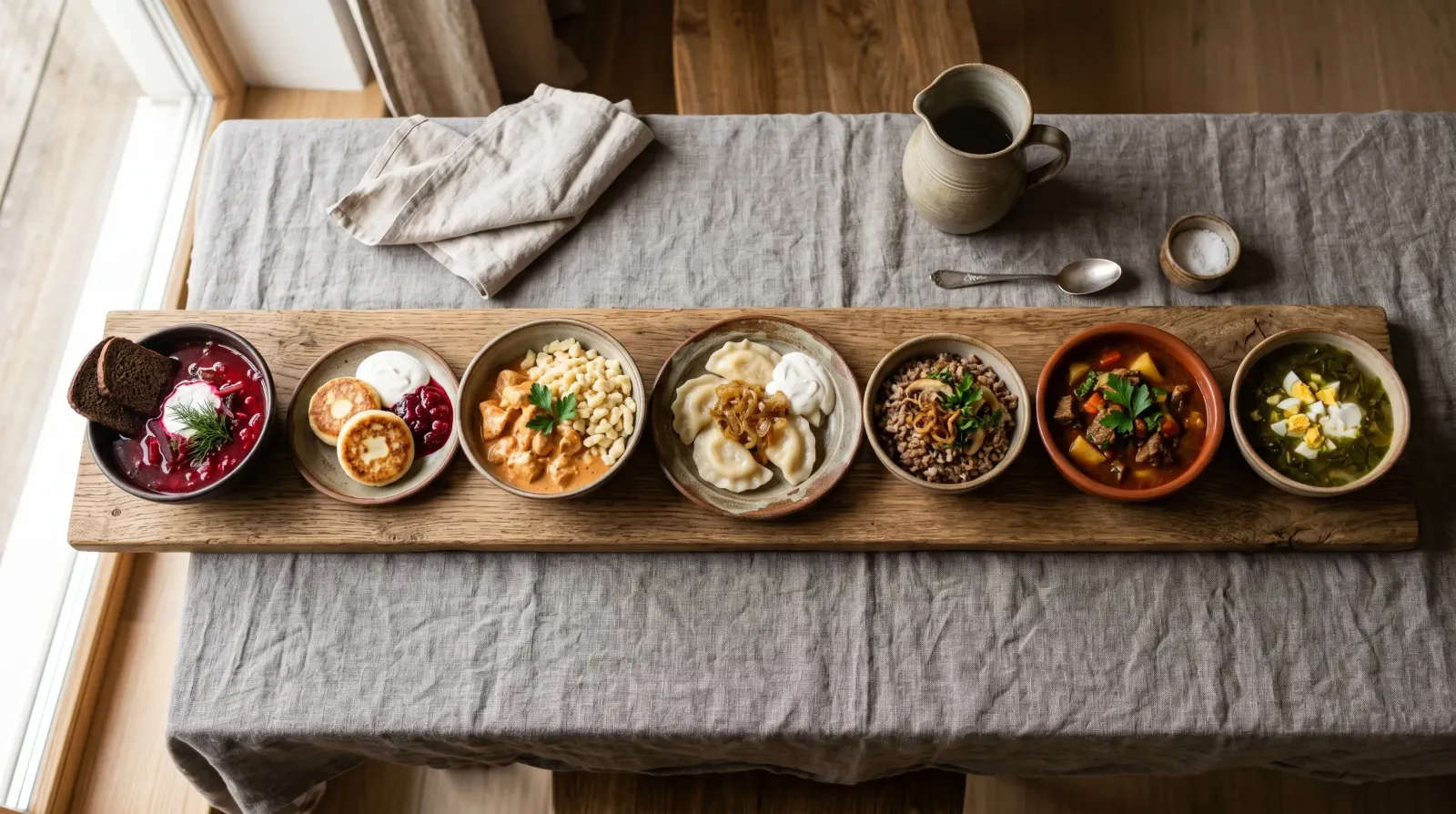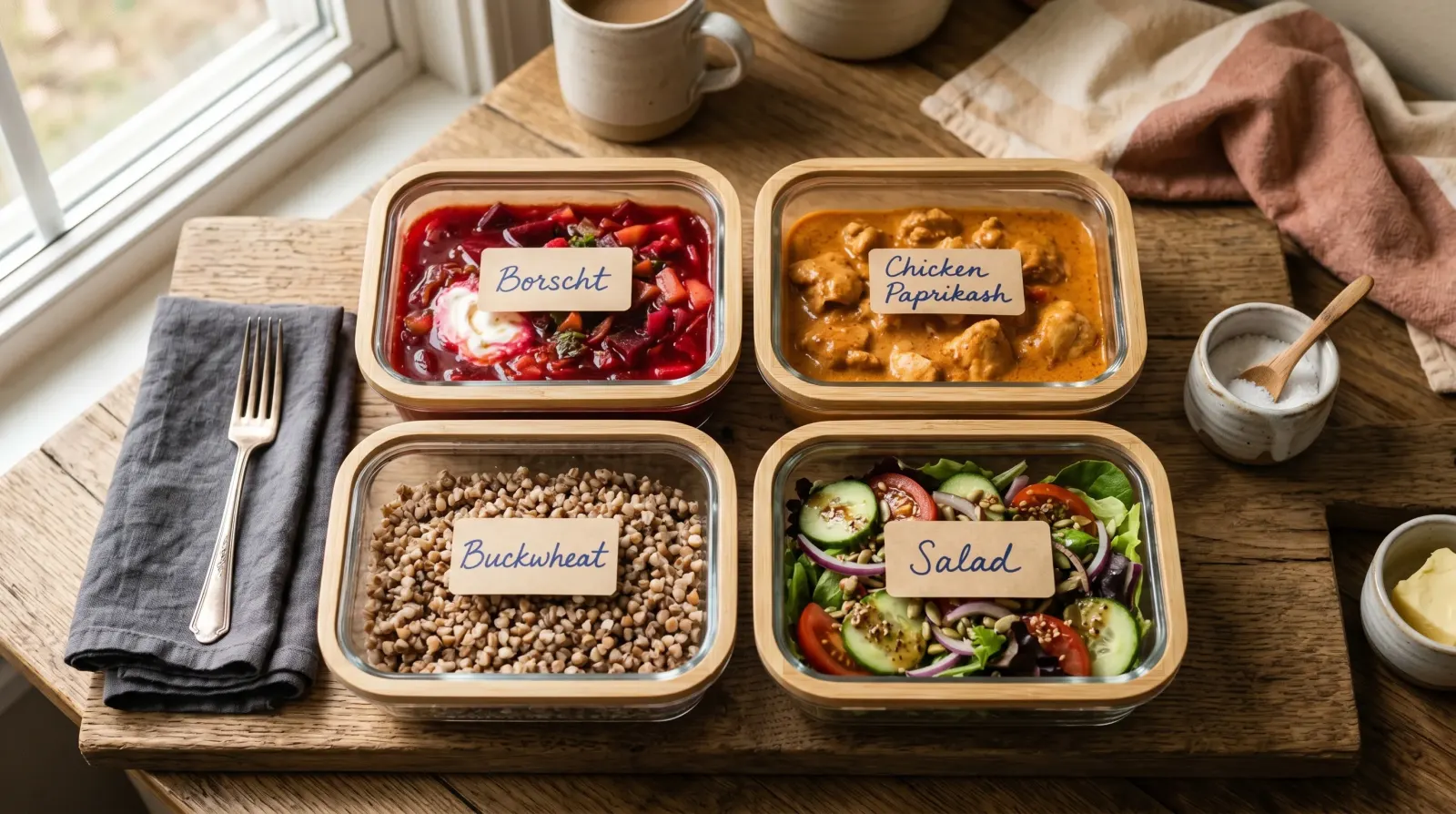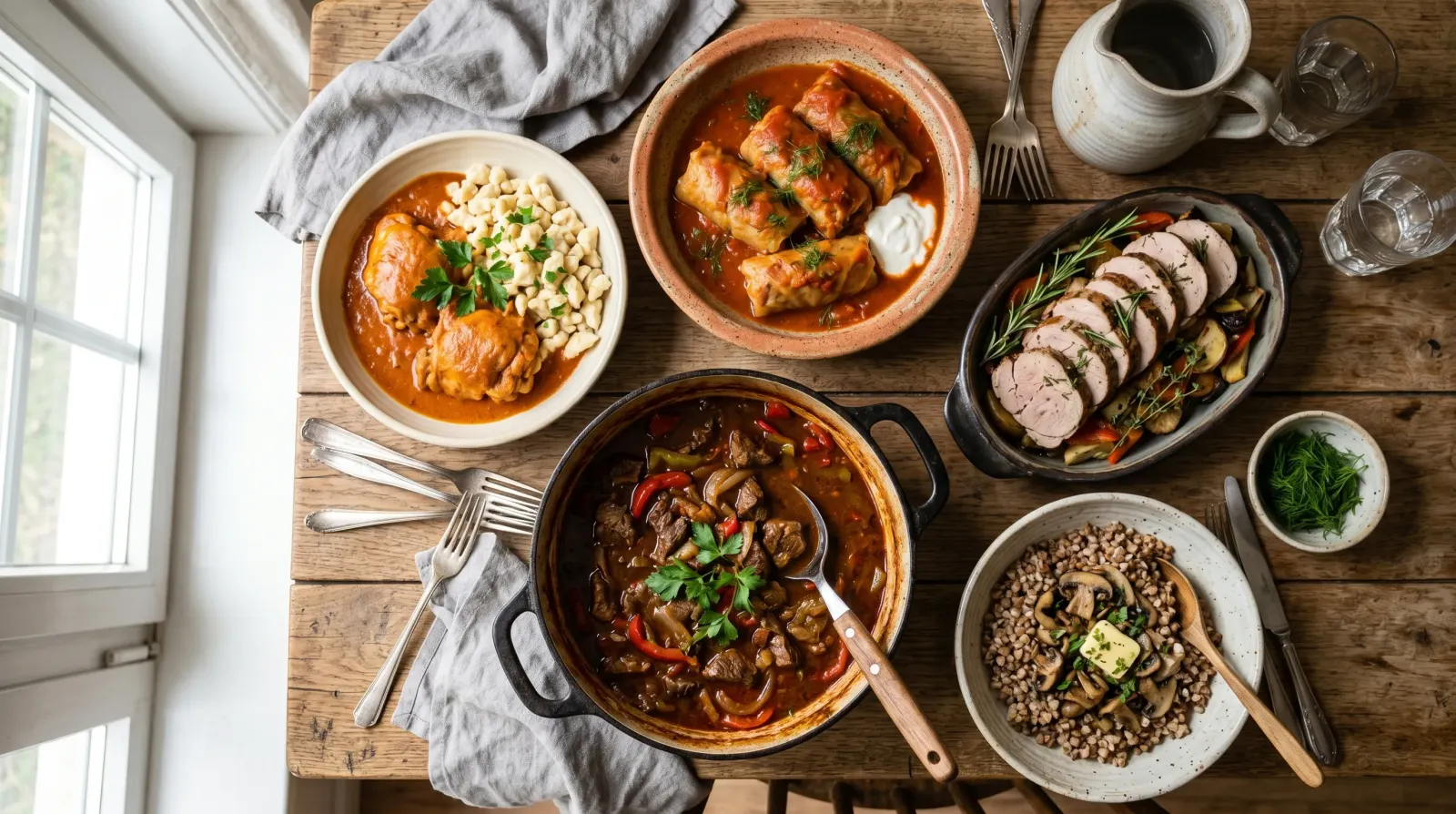
This is the reference guide I wish I had when I started cooking Eastern European food the healthy way. After years of recipe testing and occasionally making dreadful mistakes in the name of health, I have found the swaps that work, that preserve the authentic character of this cuisine while dramatically reducing calories and unhealthy fats. Save this page. Return to it whenever you are adapting a recipe from your grandmother’s collection, a Slovak cookbook, or a Ukrainian family recipe that you love.
Fats and cooking oils
Lard → Olive oil or avocado oil spray. Saves 80–120 kcal per tablespoon. Lard is the default fat in Polish, Slovak, and Hungarian cooking, and historically it was used sparingly because it was expensive. A light spray of avocado oil in a hot pan replicates the non-stick effect without the calorie load. For dishes that need browning (kotlety, potato pancakes), use 1 tsp of olive oil maximum and finish in the oven.
Sunflower oil (large pours) → Measured olive oil. Saves 60–90 kcal per serving. Most Eastern European recipes call for “a generous glug” of sunflower oil, a phrase that has no meaning until you measure it and discover it is 3–4 tablespoons. Switch to extra-virgin olive oil and measure it. One tablespoon does the same job in most cases.
Butter for frying → Ghee or oil spray. Saves 50–80 kcal per use. Butter burns before it gets hot enough to properly sear. Ghee has a higher smoke point and a richer flavour per gram. In dishes where butter flavour is important (kasha), use half the amount of real butter with half low-sodium stock.
Duck or goose fat → Small amount of duck fat + stock. Saves 100+ kcal per serving. You cannot fully replicate the flavour of duck fat, so do not try to eliminate it, use a fraction (½ tsp) to season, and add stock to the pan for body. The flavour is preserved; the calories are not.
Deep frying → Oven-baking at 220°C. Saves 150–300 kcal per serving. Deruny, krokiety, pampushky, all of them work in a hot oven on a preheated baking tray lined with a light oil spray. Not identical to fried, but close.
Rendered pork crackling as garnish → Skip or use smoked paprika. Saves 80–100 kcal. Skwarki appear on soups, salads, and side dishes throughout Poland, Slovakia, and Ukraine. The smoky, fatty flavour can be replicated with a pinch of smoked paprika stirred into a tiny amount of olive oil and drizzled cold.
Dairy and cream
Full-fat sour cream → Low-fat Greek yogurt (in hot dishes). Saves 60–80 kcal per serving. The critical technique: never add yogurt directly to a simmering pot. Remove from heat, let it cool 2 minutes, then stir in the yogurt mixed with ½ tsp cornstarch. This prevents curdling and gives you the same creamy texture. In paprikash, borscht, and goulash the difference is undetectable.
Full-fat sour cream → Low-fat sour cream (in cold dishes). Saves 40–50 kcal per serving. In cold applications, cucumber salad, cold dips, cold beet salad, low-fat sour cream works better than yogurt, which can be too tangy. The texture also holds better when not heated.
Full-fat tvaroh/quark → Low-fat cottage cheese, strained. Saves 70–100 kcal per serving. Pour low-fat cottage cheese through a sieve or cheesecloth for 30 minutes. The result has the same consistency as tvaroh and works in syrniki, nalysnyky filling, and desserts.
Whipping cream in sauces → Evaporated skimmed milk + cornstarch. Saves 200+ kcal per serving. Mix 1 tbsp cornstarch into 200ml evaporated skimmed milk. Stir into the sauce off the heat. It thickens beautifully and gives richness without the fat. Works in creamy soups and any sauce where cream is used for body rather than flavour.
Full-fat kefir → Low-fat kefir. Saves 30–40 kcal per glass. The flavour difference between full-fat and low-fat kefir is minimal, particularly in baked goods. In cold drinks and marinades, low-fat kefir performs identically.
Condensed milk → Evaporated skimmed milk + sweetener. Saves 150+ kcal per serving. In Eastern European baking, condensed milk often appears in fillings and frostings. Evaporated skimmed milk with a small amount of powdered sweetener gives the same thick sweetness at a fraction of the calories.
Meat and protein
Fatty pork shoulder → Pork tenderloin. Saves 80–120 kcal per 100g. Tenderloin is the leanest cut on the pig, 3–5g fat per 100g versus 15–25g in shoulder. It dries out if overcooked, so keep it pink in the centre and let it rest properly. For slow-cooked dishes like bigos, use lean pork leg instead.
Duck or goose → Chicken thighs (skin-off). Saves 100–150 kcal per 100g. Chicken thighs have enough fat to stay juicy through long cooking. They absorb marinades well and work in any recipe that calls for duck or goose in a braise or paprikash.
Minced pork (fatty) → Turkey mince or lean beef mince. Saves 60–90 kcal per 100g. For kotlety and holubtsi filling. Turkey mince is extremely lean, add a little olive oil and one egg yolk to keep the texture moist. Lean beef mince (5% fat) is a direct swap.
Whole eggs (yolk-heavy use) → Egg whites + 1 yolk. Saves 50–70 kcal per serving. In bindings and batters, replace 2 whole eggs with 3 egg whites + 1 yolk. The structure holds, the richness is present, the calories are not.
Fatty smoked sausage as main protein → Lean smoked chicken sausage. Saves 100–150 kcal per 100g. Kielbasa and its Slovak/Czech equivalents are high in fat by design. Lean smoked chicken sausage gives you the smoky flavour in soups and stews without the fat. Use it in żurek, kapustnica, and lentil soups.
Canned sardines in oil → Canned sardines in brine. Saves 40–60 kcal per serving. Used in spreads and salads across Eastern European cuisine. The brine-packed variety has the same protein content and identical flavour once seasoned.
Grains and carbohydrates
White bread → Dark rye bread. Lower glycaemic load, higher fibre. Rye bread keeps you full longer and has a stronger flavour, which means you need less of it. Two slices of rye bread satisfies where three slices of white bread might not.
White flour (in dumplings and pancakes) → Half oat flour. Saves 15–20 kcal per 100g and doubles the fibre. Replacing half the white flour in halushky, varenyky dough, or syrniki batter with fine oat flour gives a slightly denser texture and noticeably more satiety. A 50/50 blend is undetectable in most applications.
White rice → Buckwheat (grechka). Saves 20–30 kcal per 100g cooked, with three times the protein and significantly more magnesium. Buckwheat is already native to Eastern European cuisine, this is not a foreign health food substitution, it is a return to tradition. Toast it briefly before cooking for a nuttier flavour.
Egg noodles in soups → Fewer noodles + more vegetables. Saves 80–120 kcal per bowl. Rassolnik, chicken noodle soup, and vegetable broth traditionally use noodles as a filler. Halve the noodles and double the carrots, celery root, and parsley root. The soup is more flavourful and more filling.
Mashed potato (butter-heavy) → Mashed potato with stock. Saves 80–100 kcal per serving. Use warm low-sodium chicken stock instead of butter and whole milk. Add roasted garlic and a teaspoon of olive oil for richness. The texture is lighter, the flavour is actually better.
White sugar in baking → Erythritol or reduced sugar. Saves 30–50 kcal per tablespoon. In Eastern European sweet dishes, medivnyk, pampushky, apple strudel, sugar is often used heavily. Erythritol behaves like sugar in baking at a 1:1 ratio and adds zero calories. Alternatively, reduce the stated sugar amount by one third, most traditional recipes were written for tastes from a different era.
Flavour and seasoning
Salt-heavy seasoning → Herbs, acid, and umami. Traditional Eastern European cooking uses salt as the primary flavour driver. The healthier approach: build complexity instead. Fresh dill, parsley, bay leaf, and marjoram are all native to the cuisine and add flavour without sodium. A splash of apple cider vinegar or lemon juice at the end of cooking brightens every soup and stew.
Full-fat mayonnaise in salads → Low-fat Greek yogurt + Dijon mustard. Saves 80–100 kcal per tablespoon. Mix low-fat Greek yogurt with a teaspoon of Dijon, a squeeze of lemon, and a pinch of salt. This dressing works in Olivier salad, vinegret, and any mayonnaise-based salad, and it tastes more interesting than plain mayo.
Bread thickening in soups → Pureed vegetables. Saves 60–80 kcal per serving. Old-school Eastern European soups use bread or flour for body. Blend a cup of the cooked vegetables instead. You get the same thick consistency with more fibre and flavour.
Sugar in pickles and ferments → Reduce or replace with a little stevia. Traditional brine recipes can call for surprising amounts of sugar. Stevia or erythritol in the brine gives the same fermentation balance without the extra calories.
Commercial bouillon cubes → Homemade stock or low-sodium stock. Commercial bouillon cubes have very high sodium and synthetic flavours. Making stock from chicken or beef bones takes 20 minutes of active time and produces a base that makes every soup in this cuisine taste better. Freeze in 500ml portions.
Does Any of This Actually Work?
The swaps above are not theory, they are the result of testing these recipes repeatedly and keeping the ones that were undetectable or better. The ones I have not included here did not make the cut: low-fat cream cheese in cheesecake is detectable. Oat flour at 100% in varenyky dough is too dense. Half-portions of lard in bigos with no compensation are not enough.
Healthy Eastern European cooking is not about discipline or sacrifice. It is about understanding what actually made the original dishes work, and removing only the parts that do not serve that purpose.
Frequently asked questions
Most of these swaps taste identical to the original, the lard-to-olive-oil change is the one you might notice, mainly as a slightly different mouthfeel. Adding a pinch of smoked paprika to the oil compensates almost completely. The full-fat to low-fat dairy swap is undetectable in cooked dishes when the yogurt goes in properly off the heat.
The single biggest calorie saving comes from replacing large pours of lard or sunflower oil with a measured tablespoon (or a light spray) of avocado oil, easily 100–200 kcal per meal. The second most impactful is full-fat sour cream to low-fat Greek yogurt, which saves 60+ kcal per serving in every dish that traditionally uses a generous dollop.
For cold dishes, cucumber salad, cold beet salad, any dip, low-fat sour cream works better than yogurt, which can be too sharp when not heated. Keep yogurt for hot applications and sour cream for cold ones.