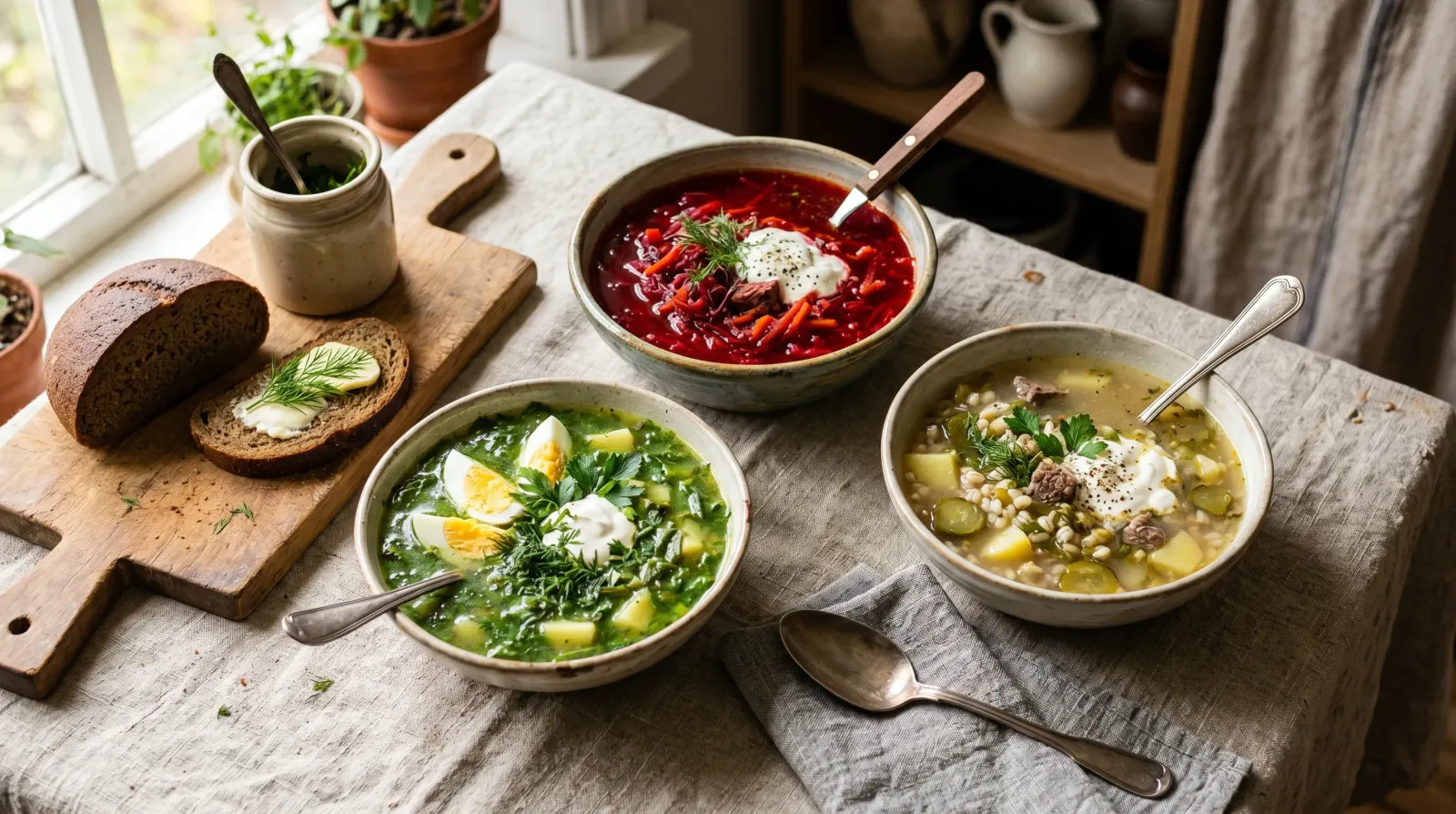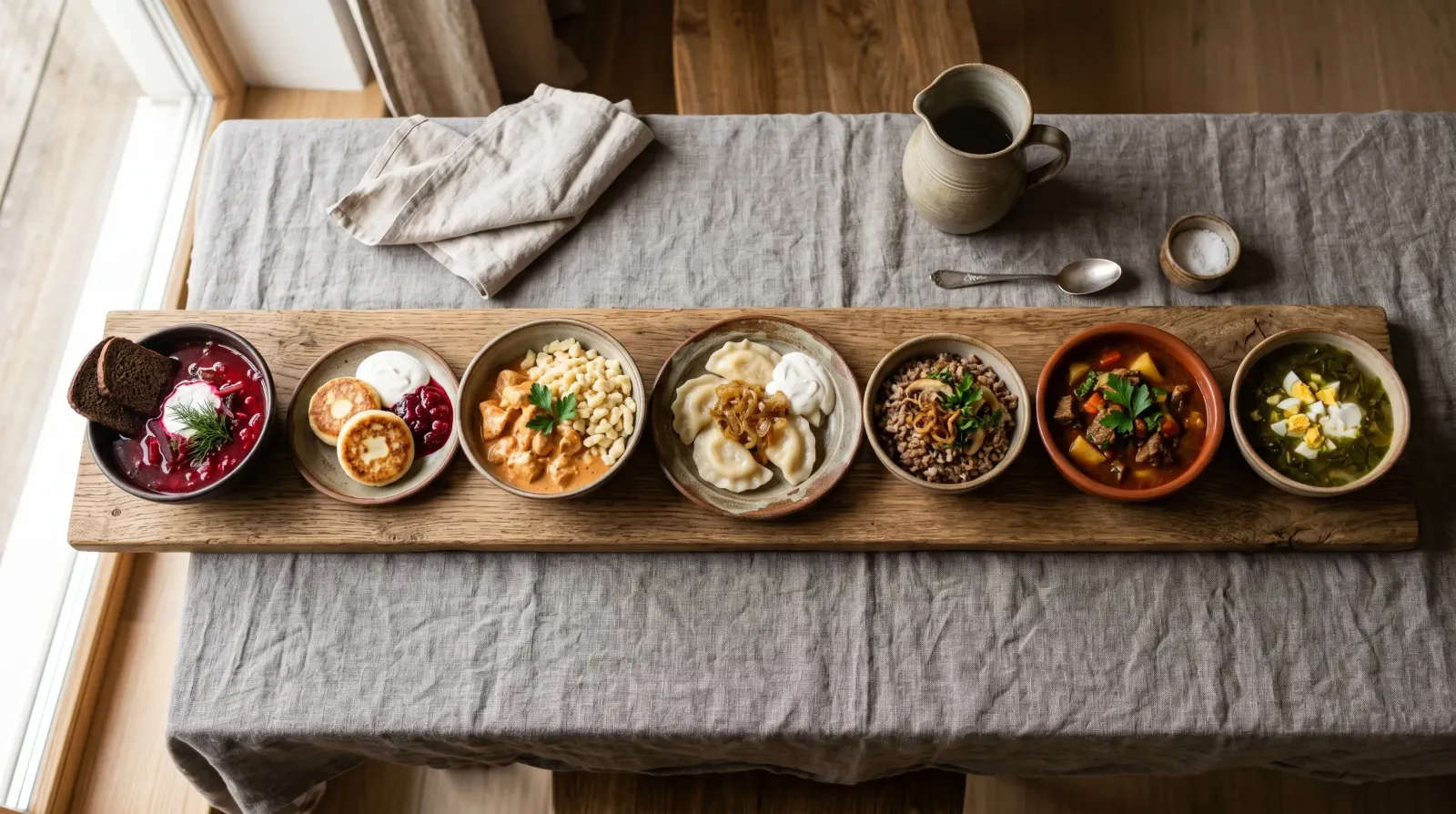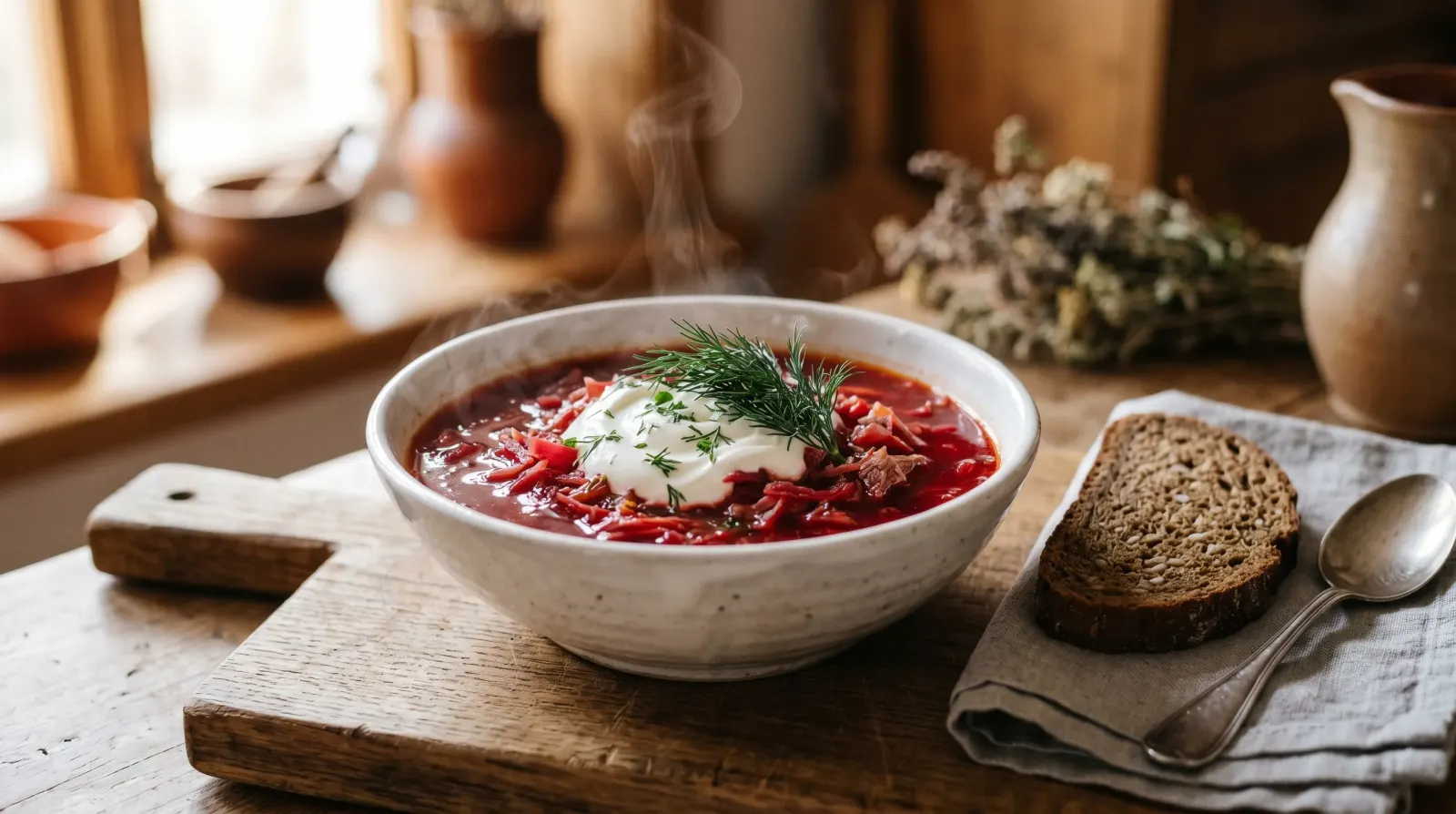
Eastern European main dishes have a reputation for being heavy, and the traditional versions often earn it. Goulash swimming in lard, cabbage rolls under a blanket of fatty sour cream, deep-fried pierogi. Nobody wants to give those up.
The good news is you do not have to. What makes this food taste the way it does is spice, slow cooking, fermentation and technique, not the fat. Change a few things and every dish in this guide lands under 400 calories a serving and still tastes like the real thing.
This is the cornerstone guide to the six main dishes in the pillar. Each has its own recipe page with step-by-step method, nutrition, prep tips and FAQs. Use this page as the map.
The six dishes in this pillar
- Chicken paprikash, the Hungarian classic, rebuilt with Greek yogurt (310 kcal)
- Holubtsi, Ukrainian cabbage rolls in tomato sauce instead of sour cream (280 kcal)
- Hungarian goulash, same depth of flavour, far less fat (340 kcal)
- Baked varenyky/pierogi, oven instead of frying pan (320 kcal)
- Buckwheat with mushrooms, the plant-based option (290 kcal)
- Slovak pork tenderloin, the high-protein main (360 kcal)
Full recipes are linked at the bottom of the page. First, the method that ties them together.
The master technique
Most of these dishes share the same skeleton. Learn it once and you can lighten almost anything in the tradition.
Step 1: the sofrito base (základ)
Nearly every main dish starts the same way: onion, carrot and celery (or parsnip) sweated slowly in a little fat. The Hungarians call it alap, the Slovaks základ, the Ukrainians zasmazka. Traditionally it is lard. I use a teaspoon of olive oil and cannot tell the difference in the pot.
Step 2: the paprika bloom
For the Hungarian and Slovak dishes, stir the paprika into the onion base and cook it for 60 seconds in the fat before any liquid goes in. That blooming step releases the fat-soluble flavour and makes the paprika taste far stronger. Skip it and the dish tastes flat, so it is worth the minute.
Step 3: the slow simmer
These are not fast food. Low, slow heat breaks down the tougher cuts, works the spice into the sauce, and builds a depth you cannot rush. Ninety minutes on low beats an hour in a pressure cooker, though the pressure cooker will do in a pinch.
Step 4: the dairy finish (off the heat)
Many of these dishes traditionally finish with sour cream stirred in. In my healthy versions, I use low-fat Greek yogurt or light sour cream, but the critical technique is the same: add it OFF THE HEAT, or with the heat on absolute minimum, stirring constantly. Boiling any dairy protein causes it to curdle and separate. Remove from heat, let cool slightly, stir in the yogurt, then serve immediately.
Universal swaps
These five changes carry across almost every dish here, and none of them cost you flavour:
- Lard to a teaspoon of olive oil for the base. The sofrito behaves the same.
- Full-fat sour cream to low-fat Greek yogurt, added off the heat so it does not split.
- Frying to baking for anything breaded or doughy (varenyky, deruny, syrniki).
- White rice or mashed potato to buckwheat kasha or cauliflower mash as the side.
- Big meat portions to a smaller amount of leaner meat, with the volume made up in vegetables.
What to serve with these dishes
Traditional sides are often as calorie-dense as the main. These stay light without leaving the tradition:
- Steamed whole buckwheat (kasha), 170 kcal per 150g cooked, high in magnesium and protein
- Cauliflower mash, replaces potato mash at 1/4 of the calories; excellent under paprikash
- Simple cucumber salad with dill and apple cider vinegar, a classic Eastern European fresh side
- Steamed or roasted root vegetables, carrots, parsnips, beets
- Sauerkraut, probiotic-rich, zero calories, cuts through rich main dishes beautifully
- Whole rye bread (one slice), satisfying, high fibre, traditional
Meal planning with these dishes
These dishes are ideal for weekly batch cooking. Here is a simple framework:
- Cook one batch of goulash or cabbage rolls on Sunday (both freeze perfectly).
- Make a pot of buckwheat kasha, it keeps 5 days in the fridge and pairs with everything.
- Prep paprikash chicken pieces ahead; cook the sauce fresh (takes only 20 minutes).
- Portion cooked varenyky individually on a baking sheet, freeze, then bag, reheat any time.
- Keep a jar of sauerkraut in the fridge as your daily probiotic side dish.
Frequently asked questions
Are Eastern European main dishes good for weight loss?
Yes, with the right approach. The traditional cuisine is based on lean proteins, slow-cooked vegetables, and wholegrains like buckwheat and rye. The main culprits in the traditional diet are lard, heavy sour cream, and oversized portions. Fix those and you are left with filling, high-protein meals that happen to be light on calories.
Which Eastern European dish has the most protein?
Slovak-style pork tenderloin tops this list at 42g of protein per serving. Chicken paprikash comes second at 38g. If you are following a high-protein diet, both of these dishes are exceptional choices. Even the plant-based buckwheat and mushroom dish provides a solid 14g of plant protein.
Can I make these dishes in advance?
Absolutely, these dishes are designed for batch cooking. Goulash, cabbage rolls, and paprikash all taste significantly better the next day as the flavours deepen. Store in the fridge up to 4 days, or freeze for up to 3 months. The one exception is varenyky, freeze uncooked, never pre-cooked.
Are these dishes suitable for a gluten-free diet?
Most of them adapt easily. Paprikash, goulash, cabbage rolls, buckwheat, and pork tenderloin are all naturally gluten-free or easily made so. Varenyky/pierogi require a gluten-free flour blend. Always check that your paprika and sausage products are certified gluten-free.
Explore the full recipes
- ➜ Low-Calorie Chicken Paprikash, Hungarian Classic with Greek Yogurt (310 kcal)
- ➜ Healthy Holubtsi (Cabbage Rolls), Ukrainian Weight-Loss Version (280 kcal)
- ➜ Lighter Hungarian Goulash, All the Flavour, Fewer Calories (340 kcal)
- ➜ Healthy Baked Varenyky / Pierogi, Not Fried (320 kcal)
- ➜ Buckwheat with Mushrooms, Eastern European Superfood Bowl (290 kcal)
- ➜ Healthy Slovak Pork Tenderloin, High Protein Classic (360 kcal)
See also: