Ukrainian cooking is more regional than people expect. The black-earth heartland gives you grains, beets and pork; the Carpathians add mushrooms, trout and fermented dairy; the Black Sea coast leans on fish, fresh herbs and lighter dishes. One country, very different plates.
Most of it is already good for you. The daily diet rests on fermented foods, whole grains like buckwheat and rye, big vegetable soups and simple proteins. The parts that cause trouble, lard as the main fat, very fatty pork, heavy hand with the smetana, are the minority and easy to adjust.
The eight healthiest traditional dishes
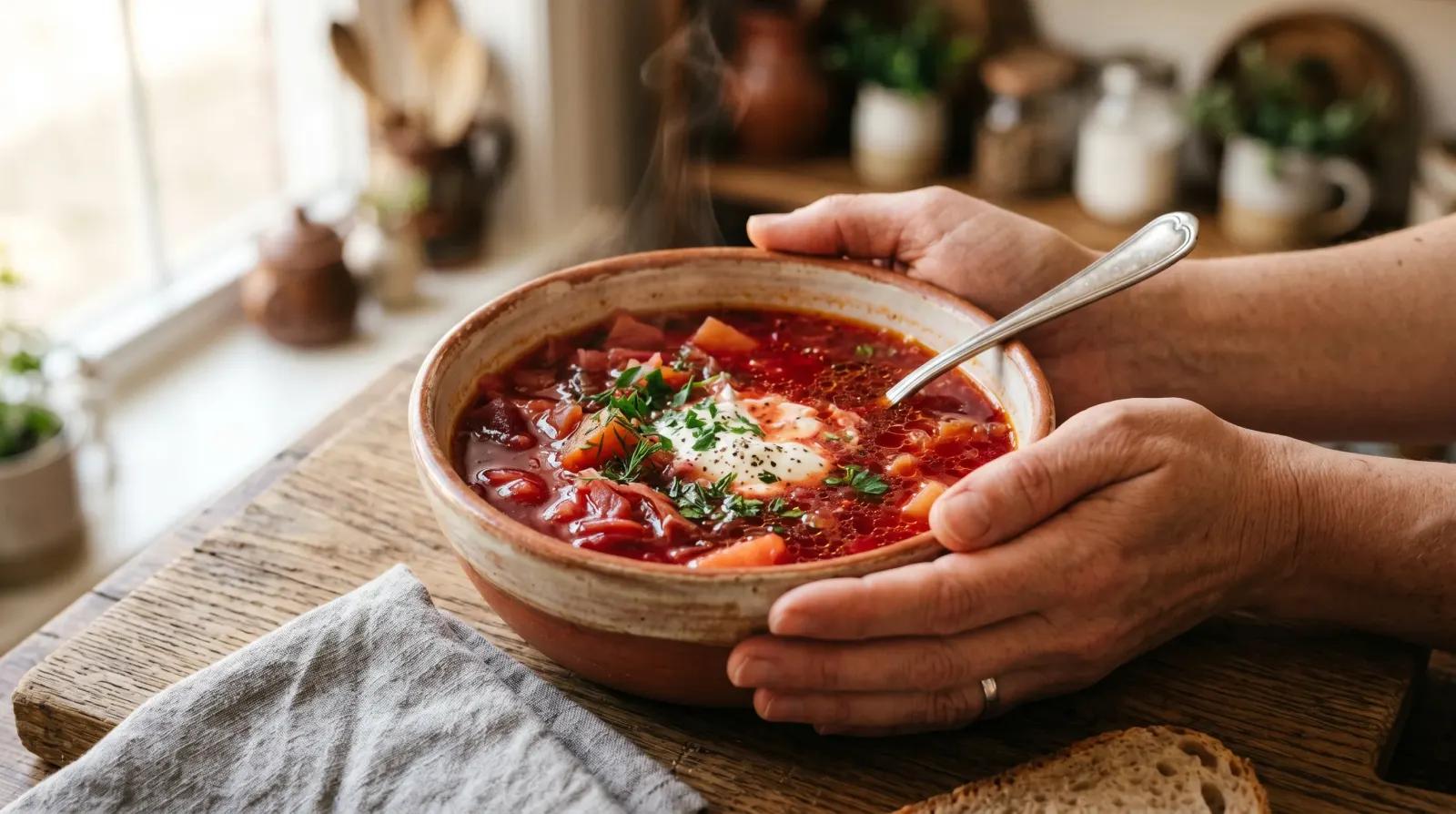
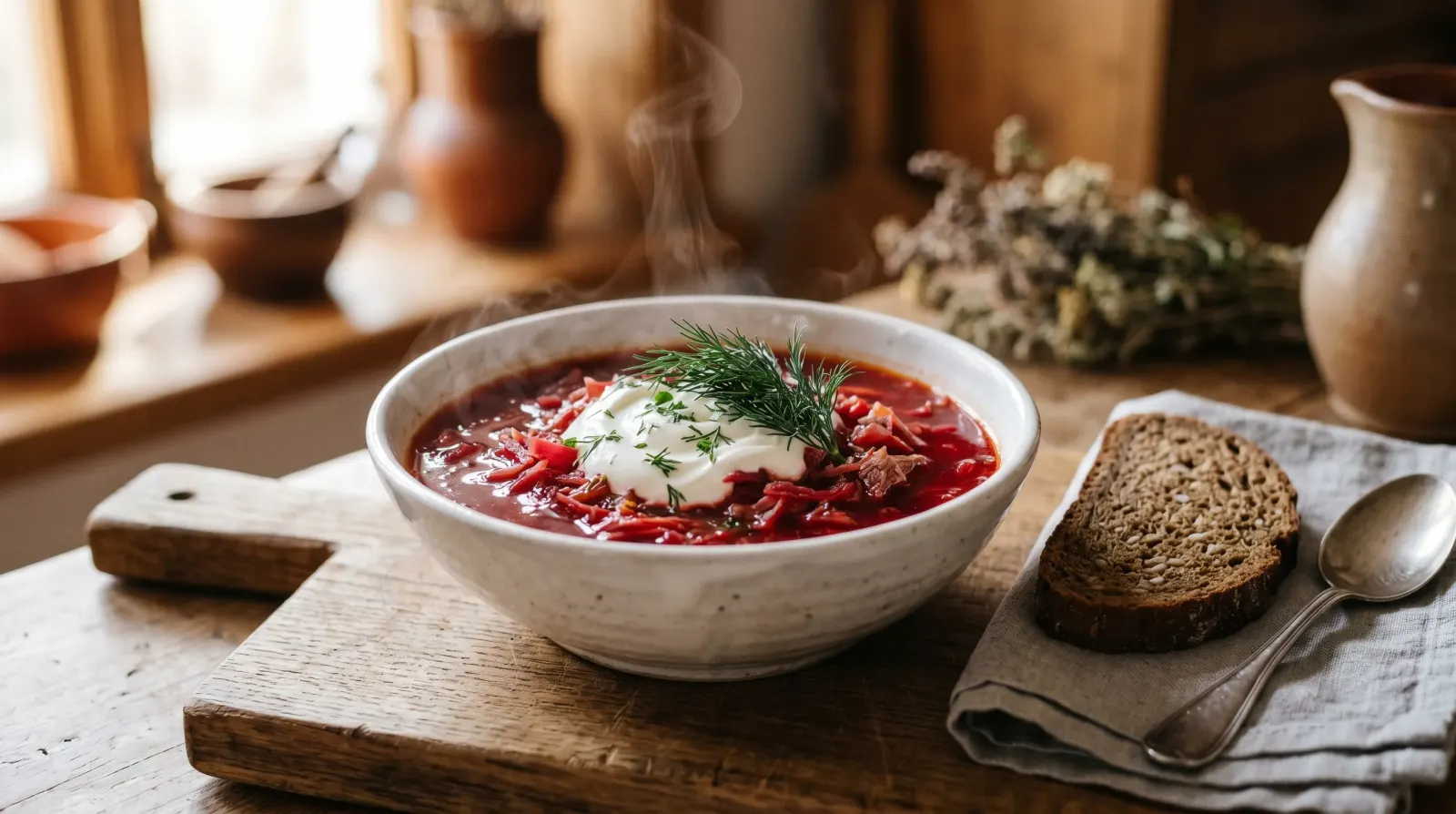
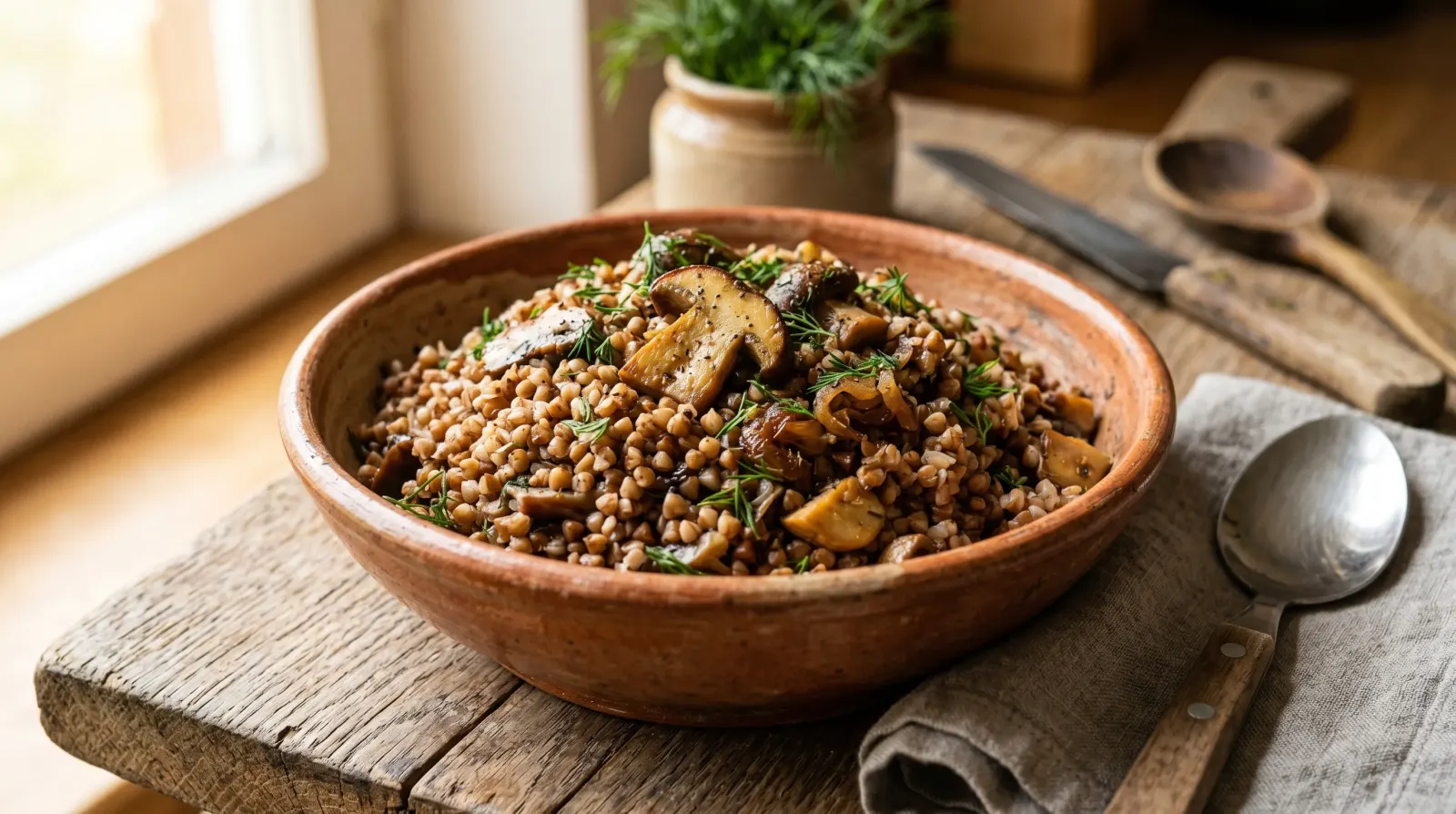
If you cook nothing else from this tradition, cook these: borscht, green borshch, holubtsi in tomato sauce, baked varenyky, syrniki, vinegret salad, buckwheat kasha with mushrooms, and baked deruny. Each one has its own recipe on the site with full nutrition numbers. Together they cover soup, mains, breakfast and salad, which is most of a week.
The Ukrainian pantry: 10 things to keep in
- Toasted buckwheat groats (kasha), the daily grain, in place of white rice at every meal
- Plain low-fat kefir, the morning ritual; buy it by the litre
- Naturally fermented sauerkraut, the probiotic side at lunch and dinner
- Naturally fermented dill pickles, for rassolnik, salads and snacking
- Fresh dill, the herb that defines the cooking; use it generously
- Beets, the heart of borscht; keep several in the fridge all week
- Hungarian sweet paprika, used in the west especially
- Low-fat cottage cheese (tvaroh), for syrniki, varenyky filling and snacks
- Rye crispbread or dark rye bread, the everyday bread
- Dried porcini, which the soups and buckwheat dishes lean on heavily
Techniques that keep it light
The zasmazka (sautéed base)
Almost every soup and stew starts with a zasmazka, a base of onion, carrot and tomato softened together. Traditionally that happens in sunflower oil or lard. Use 1 tsp olive oil in a non-stick pan instead, with a splash of water so nothing catches. You cannot tell the difference in the finished pot.
The acid finish
The soups nearly always end with acid: cider vinegar, lemon juice, or brine from the pickle jar. It brightens the flavour, and in borscht it does one more job, holding the beets’ red-pink colour instead of letting it dull. Add the acid at the end, never at the start.
Pickle brine is the flavour secret
The brine from a jar of naturally fermented pickles is the strongest cheap flavour booster in this kitchen. A tablespoon lifts soups, vinegrets and dressings, and it makes a good acid finish for borscht. Salty, sour and full of live cultures.
Frequently asked questions
What are the most popular Ukrainian dishes for weight loss?
Borscht (160 kcal), green borshch (120 kcal), and vinegret salad (130 kcal) are the three lightest traditional Ukrainian dishes. For main courses: buckwheat with mushrooms (290 kcal) and holubtsi in tomato sauce (280 kcal). These five dishes alone can build an entire weight-loss weekly meal plan with completely authentic Ukrainian flavours.
Is Ukrainian food good for gut health?
Exceptionally so, perhaps better than any other European national cuisine for gut health. The combination of daily kefir, naturally fermented sauerkraut, fermented dill pickles, sourdough rye bread, and fermented beet kvass provides a daily stream of diverse probiotic cultures and prebiotic fibre that supports a diverse, healthy gut microbiome.
Where can I find Ukrainian ingredients outside Ukraine?
Naturally fermented pickles and sauerkraut: health food stores, Polish/Ukrainian delis, and increasingly mainstream supermarkets. Kefir: most supermarkets now stock it. Buckwheat: health food stores, Eastern European shops, and online. Tvaroh/cottage cheese: any supermarket. The only harder-to-find ingredient is fresh sorrel for green borshch, replace with spinach plus lemon juice if unavailable.
Want to lose weight eating Ukrainian food? See the full daily framework: How to Eat Traditional Ukrainian Food and Still Lose Weight →